
Nine key longer‑term consequences of the US/Israeli war with Iran
An analysis of the longer‑term economic, geopolitical and investment consequences of the US–Israeli war with Iran, beyond the immediate market reaction.
5 minutes
The near‑term market is focused on oil flows and inflation, but this conflict is likely to leave a lasting economic, geopolitical, and investment impact.
1. Higher prices and more persistent inflation
Repeated supply shocks reinforce price pressures
Energy costs feed through to transport, food, and manufacturing
Inflation expectations risk becoming less anchored, making central banks’ jobs harder
“Having another hit to supply and a boost to inflation so soon after the last one runs the risk of a further boost to inflation expectations, and a loss of faith in central banks,” said AMP Chief Economist & Head of Investment Strategy Shane Oliver.
Why it matters:
Inflation may prove harder to bring back to target, keeping interest rates higher for longer.
2. Elevated geopolitical risk
The conflict reinforces a shift from a US‑led unipolar world to a more fragmented, multipolar one
Global rules‑based systems are weakened as power politics take precedence.
Regional conflicts increasingly carry global economic consequences
“It’s hard to see this not being interpreted by other powerful countries as a green light to do whatever they want in their region and beyond,” said Oliver.
Why it matters:
Higher geopolitical risk raises uncertainty for trade, investment, and financial markets.
3. Renewed global terrorism risk
A prolonged Middle East conflict raises the risk of radicalisation and retaliatory attacks
Markets can typically look through isolated events, but broader or sustained incidents would matter more
Why it matters:
Increased uncertainty weighs on confidence, travel, and investment.
4. Higher defence spending globally
Rising geopolitical risk almost always leads to increased military budgets
Pressure grows on US allies, including Australia, to spend more on defence
Why it matters:
More defence spending can crowd out productivity‑enhancing investment and add to public debt.
5. More investment in oil and gas infrastructure
The weaponisation of the Strait of Hormuz has highlighted our global energy vulnerability
Countries are incentivised to build alternative routes, boost reserves, and increase domestic production
Why it matters:
Energy security, even if it has to be achieved through fossil fuels, becomes a strategic priority, even as the transition continues.
6. Stronger push toward renewables and nuclear energy
Renewables and nuclear are not exposed to Middle East shipping routes or geopolitics
Energy independence becomes as important as emissions reduction
“The sun, the wind and nuclear energy do not depend on volatile politics in the Middle East,” said Oliver.
Why it matters:
Structural support for clean energy investment strengthens over time.
7. More pressure to onshore supply chains
Strategic industries (energy refining, fertilisers, metals, defence inputs) face renewed pressure to localise
Reinforces deglobalisation trends that began with the pandemic
Why it matters:
Onshoring reduces domestic vulnerabilities in case of global supply chain disruptions, but often increases costs and inflation pressures.
8. Reinforcement of a more crisis‑prone world
This conflict adds to a growing list of global shocks over the past two decades
Crises are becoming more frequent and less tied to traditional economic cycles
“The Iran war is now the fifth major global shock in the last 20 years,” said Oliver.
Why it matters:
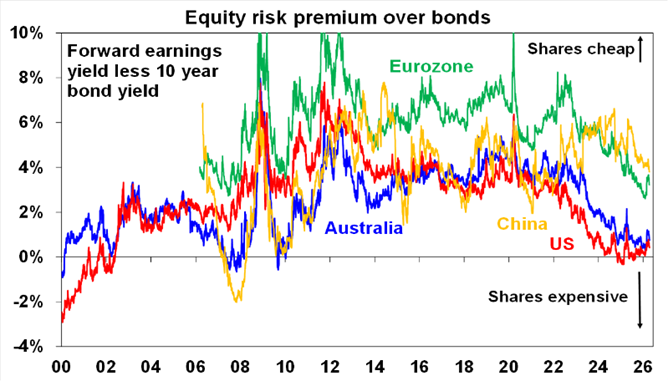
Economic and market volatility becomes a feature, not a bug, which increases risk premium.
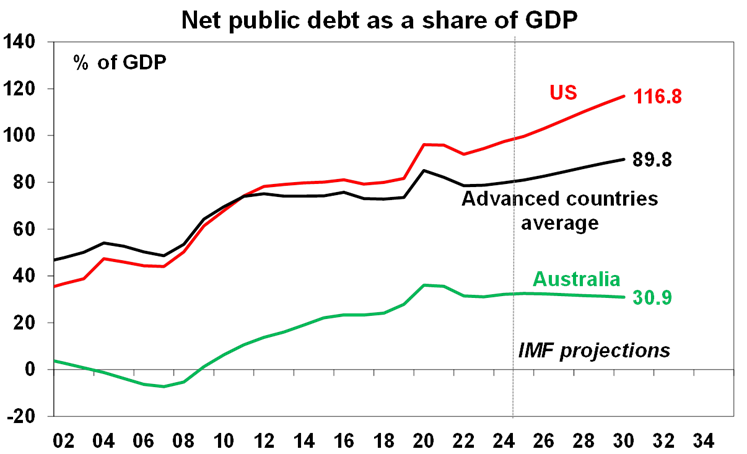
9. Bigger government and rising public debt
Defence, energy security, and cost‑of‑living support together with an ageing population drive higher public spending
Budget deficits and debt levels rise further from already elevated levels
Source: IMF, AMP
Why it matters:
Higher debt increases long‑term fiscal risk and upward pressure on bond yields.
Bottom line for advisers and investors
The conflict reinforces trends toward higher inflation volatility, bigger government, and greater geopolitical risk of populism and nationalism
Portfolio resilience, diversification, clear advice and risk awareness matter more than ever
“Over the long term this risks weaker growth, more inflation‑prone economies and more volatile investment returns,” said Oliver.
Source: Bloomberg, AMP
Growth Insight stay focused on what you can control, even when the global backdrop is uncertain.
Important information
® North and MyNorth are trademarks registered to NMMT.
The information on this page has been provided by NMMT Limited ABN 42 058 835 573, AFSL 234653 (NMMT). It contains general advice only, does not take account of your client’s personal objectives, financial situation or needs, and a client should consider whether this information is appropriate for them before making any decisions. It’s important your client consider their circumstances and read the relevant product disclosure statement (PDS), investor directed portfolio guide (IDPS Guide) and target market determination (TMD), available from northonline.com.au or by contacting the North Service Centre on 1800 667 841, before deciding what’s right for them.
MyNorth Investment and North Investment are operated by NMMT. MyNorth Investment Guarantee is issued by National Mutual Funds Management Limited ABN 32 006 787 720, AFSL 234652 (NMFM). MyNorth Super and Pension (including MyNorth Lifetime), MyNorth Super and Pension Guarantee and North Super and Pension are issued by N.M. Superannuation Proprietary Limited (ABN 31 008 428 322, AFSL 234654 (NM Super) as trustee of the Wealth Personal Superannuation and Pension Fund (the Fund) ABN 92 381 911 598. NMMT issues the interests in and is the responsible entity for MyNorth Managed Portfolios. All managed portfolios may not be available across all products on the North platform. All of the products above are referred to collectively as MyNorth Products. The information on this page is provided only for the use of advisers, it is not intended for clients. This page provides a brief overview of some of the benefits of investing in MyNorth Products. The adviser remains responsible for any advice/services they provide to clients including making their own inquiries and ensuring that the advice/services are appropriate and in accordance with all legal requirements.
You can read the Financial Services Guide online for more information, including the fees and benefits that companies related to NMMT, N.M. Superannuation Proprietary Limited ABN 31 008 428 322, AFSL 234654 (N.M. Super) and their representatives may receive in relation to products and services provided.
North and MyNorth are trademarks registered to NMMT.
All information on this website is subject to change without notice.